The Importance of Water Stewardship in Home Design
As global populations increase and weather patterns shift, fresh water is becoming an increasingly precious resource. Traditional residential water systems are highly linear: pristine, municipally treated drinking water is piped in, used once (often for non-potable tasks like flushing toilets or watering lawns), and immediately piped away as waste. Sustainable water design transforms this linear path into a circular model, focusing on extreme efficiency and secondary reuse.
High-Efficiency Indoor Fixtures
The most immediate and cost-effective method to conserve water is reducing flow at the point of use. Over the past two decades, plumbing technology has advanced rapidly, allowing for low-flow fixtures that do not compromise user experience.
- Low-Flow Toilets: Traditional toilets once used several gallons per flush. Modern dual-flush or ultra-low-flow models operate effectively on a fraction of that volume. Composting toilets take this a step further in specialized off-grid designs by eliminating water entirely.
- Aerated Faucets and Showerheads: Aerators mix air into the water stream, maintaining water pressure and volume perception while drastically cutting actual water output.
- Smart Appliances: High-efficiency dishwashers and front-loading washing machines utilize advanced sensors to adjust water usage based on the size and soil level of the load, significantly outperforming older models.
Greywater Recycling Systems
Greywater refers to gently used water from bathroom sinks, showers, tubs, and washing machines. Unlike blackwater (from toilets), greywater does not contain dangerous levels of human pathogens, making it highly suitable for secondary applications.
A residential greywater system diverts this water before it reaches the sewer line. Simple systems route this water directly to subsurface irrigation in the landscape, safely watering trees and shrubs. More complex, integrated systems filter and lightly treat greywater, storing it for indoor non-potable uses, most commonly toilet flushing. By implementing greywater reuse, a household can comfortably reduce its reliance on municipal freshwater by 30% to 50% depending on usage habits and system complexity.
Rainwater Harvesting Technology
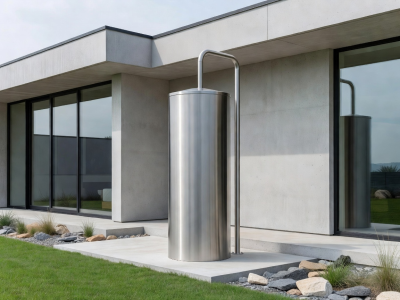
Capturing precipitation directly from the roof provides a localized, self-sufficient water source. Rainwater harvesting ranges from simple rain barrels to highly engineered cistern systems buried underground.
A comprehensive system involves a catchment area (the roof), gutters and downspouts, a pre-filtration mechanism (first-flush diverter) to remove debris and roof pollutants, and a storage tank (cistern). From the cistern, a pump delivers water for irrigation or exterior washing. With advanced ultraviolet (UV) sterilization and multi-stage filtration, some jurisdictions permit rainwater to be purified to potable standards, supplying the entire home with pristine, soft water directly from the sky.
Smart Leak Detection and Monitoring
Even the most advanced conservation systems can be undermined by hidden leaks. A constantly running toilet or a pinhole leak in a concealed pipe can waste thousands of gallons a month. Smart water monitoring devices attach directly to the home's main water line, analyzing flow patterns using machine learning.
These monitors can detect micro-leaks or catastrophic bursts, instantly alerting homeowners via smartphone applications. In emergencies, many of these devices feature automatic shut-off valves, stopping water flow entirely to prevent massive resource loss and severe property damage.
Conclusion
Integrating water conservation systems into home design is a critical pillar of environmental stewardship. Through a combination of high-efficiency fixtures, smart monitoring, and the integration of alternative sources like greywater and rainwater, modern eco-homes demonstrate that water efficiency does not require a reduction in comfort or functionality. Rather, it demands thoughtful engineering and a fundamental respect for this vital resource.