Rethinking Residential Energy Use
Residential buildings account for a significant portion of global energy consumption, predominantly driven by heating, cooling, and lighting demands. Creating an energy-efficient home is no longer just about installing efficient appliances; it requires a holistic approach to the building envelope, site orientation, and mechanical systems. By prioritizing reducing demand first, homeowners can drastically minimize the need for external power sources, moving closer to the ideal of a net-zero or net-positive energy home.
The Power of Passive Solar Design
Passive solar design works with the local climate to maintain comfortable indoor temperatures without relying heavily on active mechanical heating or cooling systems. It relies on a few fundamental concepts:
- Orientation: In the Northern Hemisphere, orienting the longest axis of a home east-west allows for maximum south-facing exposure, capturing solar heat during winter months.
- Thermal Mass: Materials with high density, such as concrete, stone, or earth floors, absorb heat during sunny winter days and slowly radiate it back into the living space at night.
- Strategic Shading: Roof overhangs and awnings are precisely calculated to block the high-angled summer sun from entering windows, preventing overheating, while allowing the low-angled winter sun to penetrate deeply into the home.
- Natural Ventilation: Placing operable windows to capture prevailing cooling breezes allows for effective cross-ventilation and thermal regulation during warmer months.
When properly executed, passive solar design can reduce mechanical heating and cooling loads by upwards of 50%, requiring minimal technological intervention.
Insulation and the Building Envelope
Even the most advanced passive solar home will fail if the captured heat escapes through a leaky building envelope. Creating a continuous thermal boundary is paramount. This involves combining high R-value (thermal resistance) insulation with rigorous air-sealing techniques.
Modern sustainable homes often utilize techniques like staggered stud framing or double-stud walls to eliminate thermal bridging—the transfer of heat through structural wood or steel frames that interrupt insulation layers. Advanced weather-resistive barriers and smart vapor retarders manage moisture while preventing drafts. When a home is exceptionally airtight, mechanical ventilation, typically through a Heat Recovery Ventilator (HRV) or Energy Recovery Ventilator (ERV), becomes essential to supply fresh air without losing indoor thermal energy.
High-Performance Glazing
Windows are traditionally the weakest point in a building envelope, acting as thermal holes. However, modern high-performance glazing technologies have mitigated this issue. Triple-pane windows featuring inert gas fills (like argon or krypton) between the panes provide significantly higher insulation values than standard double-pane glass.
Additionally, Low-Emissivity (Low-E) coatings are applied to window glass to control heat transfer. Different coatings can be used depending on the elevation: windows facing the sun might use a coating that allows solar heat gain in cold climates, while west-facing windows might use a highly reflective coating to reject harsh afternoon heat.
Integration of Renewable Energy
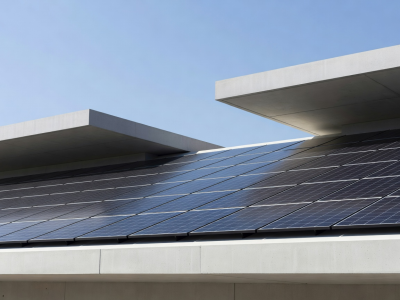
Once energy demand is minimized through passive design, insulation, and efficient systems, integrating renewable energy becomes highly effective and financially viable. The most common residential application is Photovoltaic (PV) solar panels. As efficiency has increased and production costs have fallen, solar arrays have become standard practice in modern sustainable design.
Beyond solar panels, residential battery storage systems are gaining traction. These systems store excess daytime generation for use during evening peak periods or grid outages, increasing energy independence. In specific geographic areas, small-scale wind turbines or residential geothermal heat pumps (ground-source heat pumps) offer alternative or complementary renewable solutions, leveraging stable sub-surface earth temperatures for hyper-efficient heating and cooling.
Conclusion
Achieving outstanding energy efficiency requires viewing the home as an interconnected system. The synergy between passive solar orientation, an airtight and heavily insulated envelope, high-performance windows, and renewable energy generation dictates a building's true performance. As energy codes become stricter and climate awareness grows, these practices are shifting from niche ecological concepts to essential standards of contemporary home design.